A must-read for those who want to try snowshoeing for the first time! We'll explain in detail the appeal of snowshoes, which allow you to walk on fluffy snow without any special skills. We'll also cover everything from what to wear, what to bring, estimated prices, and tips on making reservations so that beginners and families can enjoy the experience without any problems. After reading this article, you'll be all set to safely enjoy the spectacular winter scenery!
Are you thinking, "I'd love to go to the snowy mountains in winter, but skiing and snowboarding seem too difficult..."? If so, we recommendsnowshoeing.
With snowshoes, you can freely walk across fluffy, fresh snow that you normally can't walk in, even if you don't have any special skills. Here, we'll introduce you to an easy-to-understand guide to enjoying snowshoes, the perfect way to create winter memories
H2: What is snowshoeing? Three things that will make hiking in the snowy mountains even more fun
Snowshoes are the so-called "Western snow shoes." Simply by attaching them to your shoes, you can walk smoothly on the snow without your feet getting buried in it
- Anyone can start walking in them right away: No practice is required like with skiing. You can start your snow mountain walk the moment you put them on.
- Breathtaking scenery only visible in winter: Places that are impassable due to overgrown bushes in summer become a carpet of snow in winter. You might even encounter animal footprints or frost-covered trees deep in the deserted forest.
- Enjoy at your own pace: Since it's not strenuous exercise, people of all ages, from children to seniors, can relax and enjoy the scenery.
H2: Tips for avoiding mistakes on your first snowshoeing experience
It is dangerous for beginners to go into the snowy mountains on their own, as there is a risk of getting lost or the weather worsening. The quickest way to succeed is to start with a **guided tour**
Advantages and disadvantages
- Benefits: Not only will the guide take you to scenic viewpoints, but you can often enjoy special experiences such as observing snow crystals or having tea on the snow.
- Disadvantages: The activity may be canceled in case of bad weather such as blizzards. Also, since you will be using muscles you don't normally use, you may experience mild muscle soreness the next day.
H2: [Saved Edition] Practical information data for snowshoeing experiences
Before you make a reservation, check the following basic information:
| item | Details |
| Estimated price | Half-day tour: 5,000 yen - 8,000 yen / Full-day tour: 10,000 yen - |
| Travel time | 2 to 5 hours (depending on the course) |
| clothing | Ski wear (top and bottom), thermal underwear, waterproof hiking boots or snow boots, thick socks |
| What to bring | Knit cap, gloves, sunglasses (to prevent snow blindness), drinks, hand warmers |
| Age range | Generally, children must be elementary school age or older (kids-only courses may be available for ages 4 and up) |
| Reservation availability | Reservations are generally required . While some facilities may accept walk-ins on the day if there are openings, booking at least one week in advance is recommended to ensure a guide is available. |
💡 Tips
Many tours include the rental of snowshoes and poles in the price
It's a good idea to check
H2: Flow leading up to the experience and how to make a reservation
- Choosing an area: Hokkaido, Nagano, and Tohoku, known for their good snow quality, are popular choices.
- Search for tours: Filter your search by criteria such as "beginner-friendly" or "lunch included."
- Reservations: Apply through the official website or reservation platform.
- On the day of the event: Go to the meeting place. Details about the specific meeting place and parking are explained in a separate article.
Image alt text suggestions
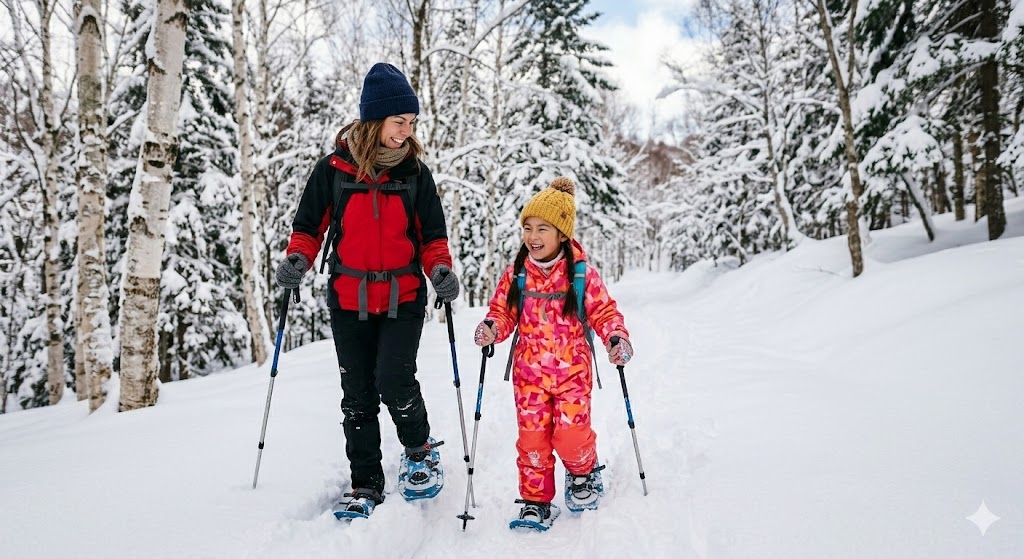
- alt1: A parent and child walking through a snow-covered forest on a snowshoeing experience (from behind).
- alt2: A scene of people sitting on fresh snow wearing snowshoes and taking a break under a blue sky.
- alt3: A complete set of rental equipment (snowshoes and poles) for the snowshoeing experience.
comment